

[ad_1]
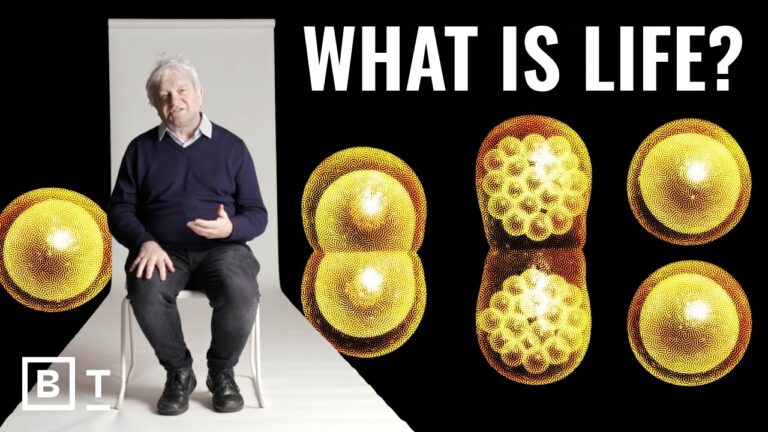
Life, as discussed by Nobel Prize-winning scientist Paul Nurse, is defined and understood from a scientific perspective based on a set of fundamental principles. Nurse emphasizes that while a single, universally accepted definition remains elusive and perhaps even unnecessary, we can identify life by observing its core characteristics and underlying mechanisms. He focuses on five key principles that, when working together, distinguish living things from non-living matter:
-
Compartmentalization: Living organisms are organized into compartments, typically cells. These compartments separate the internal environment from the external, allowing for the maintenance of specific internal conditions and facilitating complex biochemical reactions. Membranes, such as cell membranes, are crucial for compartmentalization, controlling the movement of substances in and out of the compartment. This compartmentalization provides a boundary which allows an "inside" that is different from the "outside".
-
Metabolism: Life requires energy to maintain its organization and carry out essential functions. Metabolism encompasses all the chemical reactions that occur within a living organism, including the breakdown of nutrients (catabolism) to release energy and the synthesis of complex molecules (anabolism) from simpler ones. This energy is usually acquired from an external source, such as sunlight (in the case of photosynthetic organisms) or food. Metabolism also involves waste management, removing toxic byproducts from the cellular environment. Metabolism powers the other features of life.
-
Reproduction: Living organisms have the capacity to reproduce, creating new individuals that inherit their characteristics. This reproduction can occur sexually, involving the fusion of genetic material from two parents, or asexually, where offspring arise from a single parent. Reproduction ensures the continuity of life and allows for the transmission of genetic information across generations. This inheritance can result in either a precise copy, in asexual reproduction, or with variation in sexual reproduction which gives rise to evolution.
-
Heredity: The characteristics of living organisms are encoded in their genes, which are made up of DNA (deoxyribonucleic acid) or RNA (ribonucleic acid). Heredity refers to the transmission of these genes from parents to offspring, ensuring that offspring inherit traits from their ancestors. Genetic information provides the instructions for building and maintaining the organism. Mutations in these genes can lead to variations in traits, which are the basis of evolution.
- Evolution by Natural Selection: Living organisms are capable of evolving over time through the process of natural selection. Variation exists within populations, and individuals with traits that are better suited to their environment are more likely to survive and reproduce, passing on their advantageous traits to their offspring. Over generations, this process can lead to the adaptation of populations to their environment and the emergence of new species. Nurse highlights that evolution is a fundamental principle that explains the diversity of life on Earth.
Nurse emphasizes that these five principles are interconnected and work together to define life. They are not independent traits but rather interacting features that create the complex phenomena we observe in living systems. Furthermore, while viruses possess some of these characteristics (e.g., heredity, evolution), they are not considered living organisms because they require a host cell to reproduce and lack independent metabolic activity. Their "life" is dependent on the cell it invades.
Nurse’s perspective suggests that the study of life at its most fundamental level involves understanding the molecular mechanisms that underlie these principles. This includes investigating the structure and function of proteins, nucleic acids, and other biomolecules, as well as the intricate networks of interactions that regulate cellular processes.
In essence, Nurse’s view of life centers on it being a dynamic, self-organizing system that is characterized by compartmentalization, metabolism, reproduction, heredity, and evolution. While a simple definition may be elusive, these fundamental principles provide a framework for understanding the nature of life from a scientific perspective.
[ad_2]